Your Complete Guide to Sunscreen
Posted by Histolab Skincare Australia on 26th Sep 2026
Your Complete Guide to Sunscreen
Sunscreen is one of the most important steps in any skincare routine. It helps protect your skin from UV damage, premature signs of ageing, and the appearance of dark spots — and it’s important to wear it every day, even when the weather is cloudy or cool.
But choosing the right sunscreen can sometimes feel overwhelming. With so many formulas, SPF levels, and finishes available, it’s easy to end up with a product that doesn’t suit your skin, whether that means irritation, a visible white cast, excess shine, or breakouts.
The good news? Understanding a few sunscreen basics can make finding the right one much easier.
In this blog, we’ll cover everything you need to know about sunscreen — from how it works and the difference between mineral, chemical, and hybrid sunscreens to choosing the right formula for your skin type and applying it correctly.
Let’s dive in and find the right sunscreen for your skin!
How Does Sunscreen Work?
Sunscreen helps protect your skin from the sun’s ultraviolet (UV) radiation. Think of it as a protective layer that helps reduce UV exposure and protect against sunburn, premature skin ageing, and the appearance of dark spots and uneven skin tone.
Sunscreens generally work through mineral UV filters, organic (chemical) UV filters, or a combination of both.
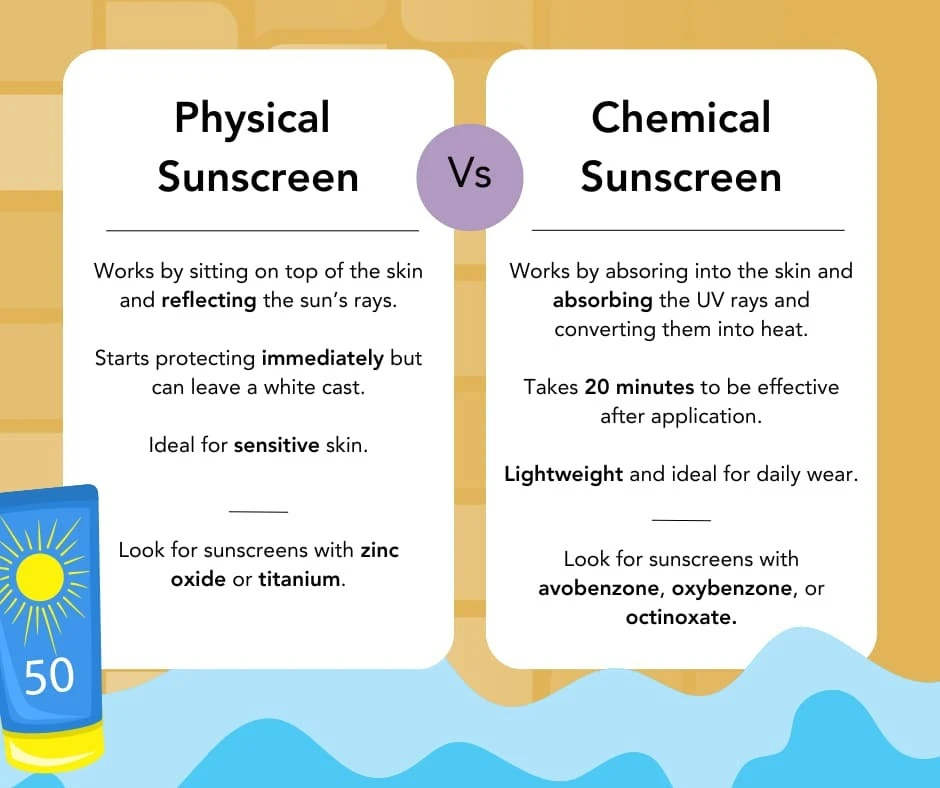
Mineral sunscreens use UV filters such as Zinc Oxide or Titanium Dioxide. They form a protective layer on the skin and help absorb, scatter, and reflect UV radiation before it can cause damage.
Chemical sunscreens use organic UV filters that absorb UV radiation and convert it into a small amount of heat, which is then released from the skin.
Hybrid sunscreens combine mineral and chemical UV filters to provide broad-spectrum UV protection while balancing texture, finish, and skin feel.
Understanding how these different sunscreen types work can help you choose a formula that fits your skin type, routine, and personal preferences.
How Is Sunscreen Strength Measured?
Sunscreen protection is commonly described using two ratings: SPF and PA. Each measures protection against different types of UV radiation.
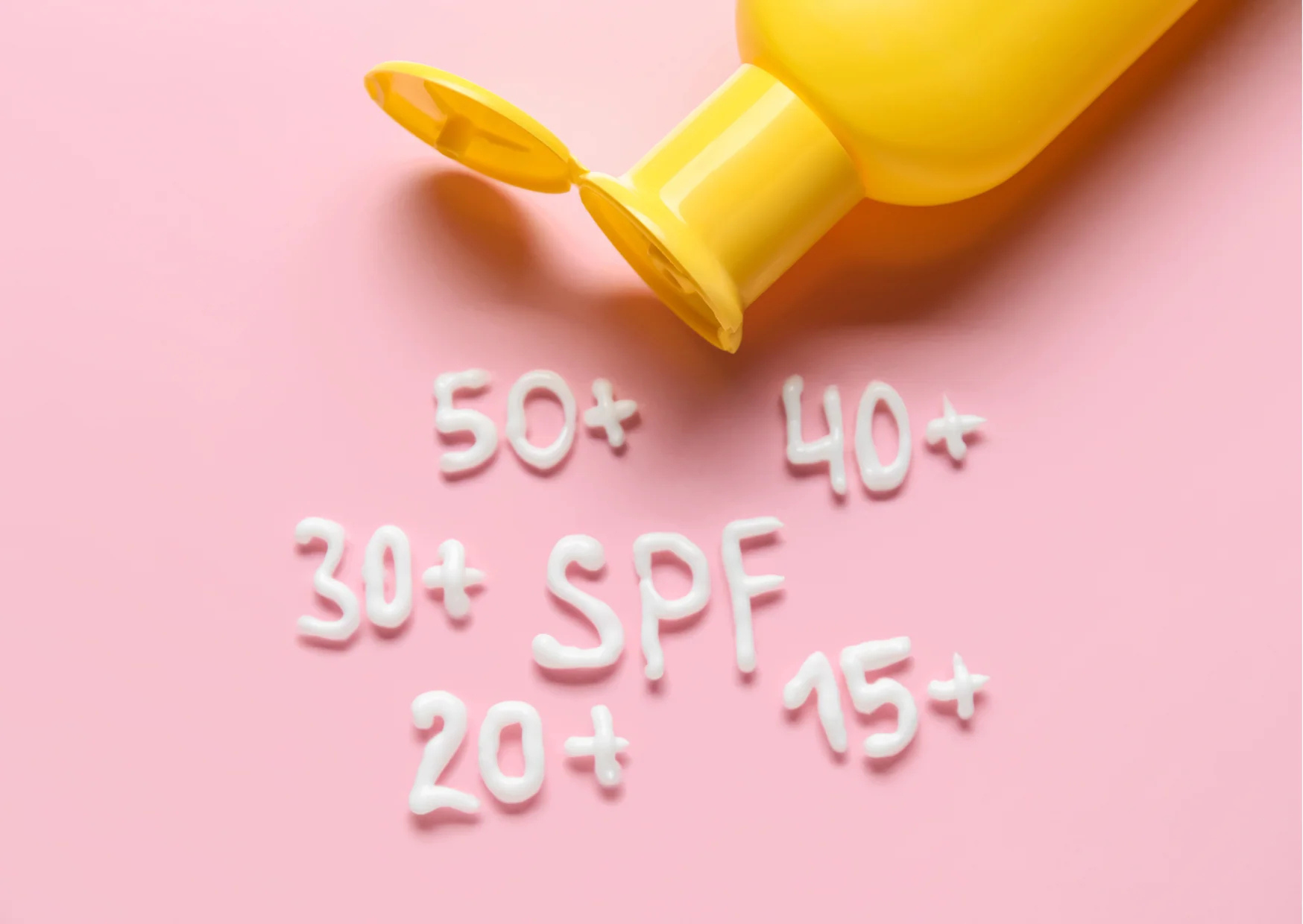
SPF (Sun Protection Factor) indicates how well a sunscreen protects against UVB rays, which are a major cause of sunburn and contribute to skin damage. The higher the SPF, the greater the level of UVB protection — but the scale is not linear. For example, SPF 50 does not provide twice as much protection as SPF 25.
As a general guide:
- SPF 15 filters approximately 93% of UVB rays.
- SPF 30 filters approximately 97% of UVB rays and is widely used for daily sun protection.
- SPF 50 filters approximately 98% of UVB rays, making it a suitable choice when spending extended periods outdoors or in strong sunlight.
It’s important to remember that no sunscreen blocks 100% of UVB rays, and the level of protection you actually receive depends on applying enough sunscreen and reapplying it regularly.
PA (Protection Grade of UVA) indicates how well a sunscreen protects against UVA rays. Unlike UVB rays, UVA rays penetrate deeper into the skin and are associated with premature skin ageing, pigmentation, and long-term UV damage.
The PA system uses a “+” rating to indicate the level of UVA protection:
- PA+ : Some UVA protection
- PA++ : Moderate UVA protection
- PA+++ : High UVA protection
- PA++++ : Extremely high UVA protection
In simple terms, SPF mainly indicates UVB protection, while PA indicates UVA protection. Choosing a sunscreen with a high PA rating can help provide stronger protection against the UVA exposure associated with premature skin ageing and pigmentation.
What’s the Best Sunscreen for the Face?
Mineral, chemical, and hybrid sunscreens can all provide effective UV protection when formulated with appropriate SPF and UVA protection. So, how do you know which type is right for you?
The answer often comes down to your skin type, preferences, and how your skin responds to different formulas.
Mineral sunscreen
Mineral sunscreens can be a good option for sensitive or easily irritated skin because they use mineral UV filters such as Zinc Oxide and Titanium Dioxide. These filters remain primarily on the surface of the skin and help protect it from UV radiation.
Zinc Oxide is widely used in sunscreens and is generally well tolerated by sensitive skin. Mineral formulas can also be a useful choice if you prefer a sunscreen with a simple UV-filter system.
However, mineral sunscreens may sometimes leave a white cast, particularly on deeper skin tones, although newer formulations have improved significantly in texture and finish.
If environmental impact is important to you, look beyond the terms “reef-safe” or “reef-friendly” and check the specific UV filters and the overall formulation. There is currently no single universal standard for these marketing terms, and the environmental impact of sunscreen can vary between products.
Chemical sunscreen
Chemical sunscreens can be a great option for oily or combination skin, particularly if you prefer a lightweight, fast-absorbing texture. Many modern formulas feel comfortable on the skin without leaving a heavy or greasy finish, making them easy to wear under makeup or layer with other skincare products.
They also tend to blend seamlessly into the skin without the visible white cast that some mineral sunscreens may leave behind.
Chemical sunscreens use organic UV filters such as Avobenzone, Octocrylene, and Homosalate, depending on the formula and local regulations. Different filters provide protection across different parts of the UVA and UVB spectrum, so the overall formulation determines the level of broad-spectrum protection.
Many modern chemical sunscreens also include hydrating, soothing, or antioxidant ingredients to improve skin comfort and support the skin barrier.
Hybrid sunscreen
Hybrid sunscreens combine mineral and chemical UV filters in one formula. They can be a versatile option if you want to balance effective UV protection with a comfortable texture and finish.
Depending on the formulation, hybrid sunscreens can offer a lightweight feel while reducing some of the white cast that may occur with certain mineral-only formulas. They can work well for combination skin, as well as for people who simply prefer a blend of different UV-filter technologies.
If environmental considerations are important to you, check the specific UV filters and full ingredient list rather than relying solely on terms such as “reef-safe” or “reef-friendly.” These terms are not universally regulated, and environmental impact can vary depending on the formulation.
Sunscreen Application Tips
Even the right sunscreen may not provide adequate protection if it isn’t applied correctly. A few simple habits can help you get the most from your daily sun protection.
1. Apply the right amount
Using too little sunscreen can significantly reduce the level of protection you receive. For the face and neck, a commonly recommended guide is around two finger lengths of sunscreen, although the exact amount can vary depending on the product and packaging.
Don’t forget often-missed areas such as the ears, hairline, neck, and tops of the feet. If your lips are exposed, use a lip product with SPF for additional protection.
For the body, a useful general guide is approximately one shot-glass (about 30 mL) for an average adult’s exposed body, adjusting the amount according to how much skin is uncovered.
2. Reapply regularly
Sunscreen can wear off throughout the day, especially with sweating, swimming, towel-drying, or prolonged outdoor activity. Reapply approximately every 2 hours when you’re outdoors, and more frequently after swimming or heavy sweating.
Sun sticks can be a convenient option for reapplication when you’re on the go. Their compact format makes them easy to carry and apply to areas such as the face, ears, and hairline. However, make sure you apply enough product to achieve the protection stated on the label.
3. Layer your products carefully
If you wear makeup, apply sunscreen as the final step of your skincare routine, before makeup. Give it a little time to settle before applying foundation, concealer, or tinted moisturizer.
When layering, avoid excessive rubbing, as this can move or remove sunscreen from the skin. Apply your other products gently to help maintain an even layer of sun protection.
Discover the Right HISTOLAB Sunscreen for Your Skin
Finding the right sunscreen is about more than choosing a high SPF. Your skin type, daily routine, preferred texture, and the level of sun exposure you expect can all influence which formula works best for you.
At HISTOLAB, the sunscreen range includes lightweight daily formulas, high-protection outdoor sunscreens, and BB creams that combine sun protection with complexion-enhancing benefits.
For sensitive or easily irritated skin, HISTOLAB Sensitive Skin Sun Block Forever offers a comfortable daily option with a lightweight, essence-like texture. If you’re looking for stronger protection for outdoor activities or extended sun exposure, HISTOLAB 365 Plus Sun Cream SPF50+ PA++++ provides high-level UV protection with a translucent, non-sticky finish.
Prefer a little coverage with your sun protection? HISTOLAB Sun Shine Blemish Balm SPF35 PA++ and Post Care Sun Blemish Balm SPF35 PA++ combine UV protection with complexion-perfecting benefits, helping create a more even-looking finish while keeping your routine simple. For a fresh, brightened look, HISTOLAB Azulene Tone Up Cream can be used as a tone-up base to give the complexion a more radiant appearance.
Whichever formula you choose, consistency is key. Apply enough sunscreen, make it the final step of your morning skincare routine, and remember to reapply when you’re spending extended time outdoors. With the right formula, daily sun protection can become an easy and enjoyable part of your skincare routine.
Summary
Sunscreen is an essential part of daily skincare, helping protect against UV damage, premature ageing, and pigmentation. Choose a formula that suits your skin type and lifestyle, apply it generously, and reapply regularly for reliable protection.
With the right sunscreen, protecting your skin can be simple, comfortable, and part of your everyday routine.