Adult Acne: A Guide to Supporting a Healthy Skin Barrier
Posted by Histolab Skincare Australia on 4th Oct 2026
Adult Acne: A Guide to Supporting a Healthy Skin Barrier
While acne is often associated with the teenage years, many adults continue to experience breakouts well into adulthood. If you have acne-prone skin, understanding the role of your skin barrier can be an important step towards maintaining healthier, clearer-looking skin.
If you’re frustrated by recurring breakouts or unsure how to build a sustainable skincare routine, this guide will help you understand how to care for acne-prone skin while supporting and protecting your skin barrier. Discover practical skincare tips and product recommendations to help manage breakouts without unnecessarily compromising your skin’s natural barrier.
Adult Acne: What Is It and Who Does It Affect?
Adult acne, also known as post-adolescent acne, refers to acne that persists beyond the teenage years or develops for the first time during adulthood. It can affect people in their 20s, 30s, 40s and beyond. While hormonal changes can play a role, adult acne can have multiple contributing factors, including genetics, stress, skincare habits and environmental influences.
Why Does Adult Acne Happen?
Acne develops when hair follicles become clogged with excess sebum (oil), dead skin cells and other impurities. This can create an environment where inflammation develops, leading to blackheads, whiteheads and other types of breakouts.
Hormonal fluctuations can increase sebum production and contribute to adult acne. Conditions such as Polyendocrine Metabolic Ovarian Syndrome (PMOS), formerly known as Polycystic Ovary Syndrome (PCOS), can also be associated with acne and other skin changes.
However, hormones aren’t the only factor. Stress, genetics, certain medications, and skincare or cosmetic products that are unsuitable for your skin can also contribute to breakouts. For many adults, acne is influenced by a combination of factors rather than one single cause.
Adult Acne vs Teen Acne: What Is the Difference?
While acne is commonly associated with the teenage years, it can affect people at any age. Acne that continues beyond adolescence is often referred to as adult acne, while some people may experience their first breakouts later in life. The underlying causes can overlap, but acne can present differently depending on your age, hormones and individual skin characteristics.
During adolescence, hormonal changes linked to puberty can increase sebum production, contributing to clogged pores and inflammation. Breakouts may appear across the face, particularly around the forehead, nose and chin, and can also affect the chest, shoulders and back. Back and body acne are common and can be managed with an appropriate skincare routine and targeted products.
Adult acne can affect many of the same areas, but some people experience more persistent breakouts around the lower face, particularly the chin and jawline. Hormonal fluctuations, stress and increased skin sensitivity may contribute to adult breakouts. However, adult acne is not limited to one specific area or type of blemish.
The type of acne can also vary. Blackheads and whiteheads, collectively known as comedones, occur when pores become clogged. Papules are small, raised and inflamed bumps, while pustules are similar but contain pus, often appearing with a white or yellow centre. More severe acne may involve deeper, painful nodules and cysts, although these are not present in every case of adult acne.
Another consideration is what happens after a breakout heals. Adult acne can leave behind post-inflammatory hyperpigmentation (PIH), dark marks or, in some cases, acne scars. These concerns can require different approaches, so understanding the difference between post-acne marks and textured scarring is an important part of long-term acne care.
Ultimately, there is no single type of acne that belongs exclusively to teenagers or adults. Understanding your individual triggers and following a gentle, consistent skincare routine can help support clearer, healthier-looking skin at any stage of life.
What Causes Adult Acne?
Adult acne can develop for several reasons, and there is rarely just one contributing factor. Genetics, hormonal fluctuations, excess sebum production, inflammation, lifestyle factors, and the skincare or cosmetic products you use can all influence the likelihood of breakouts.
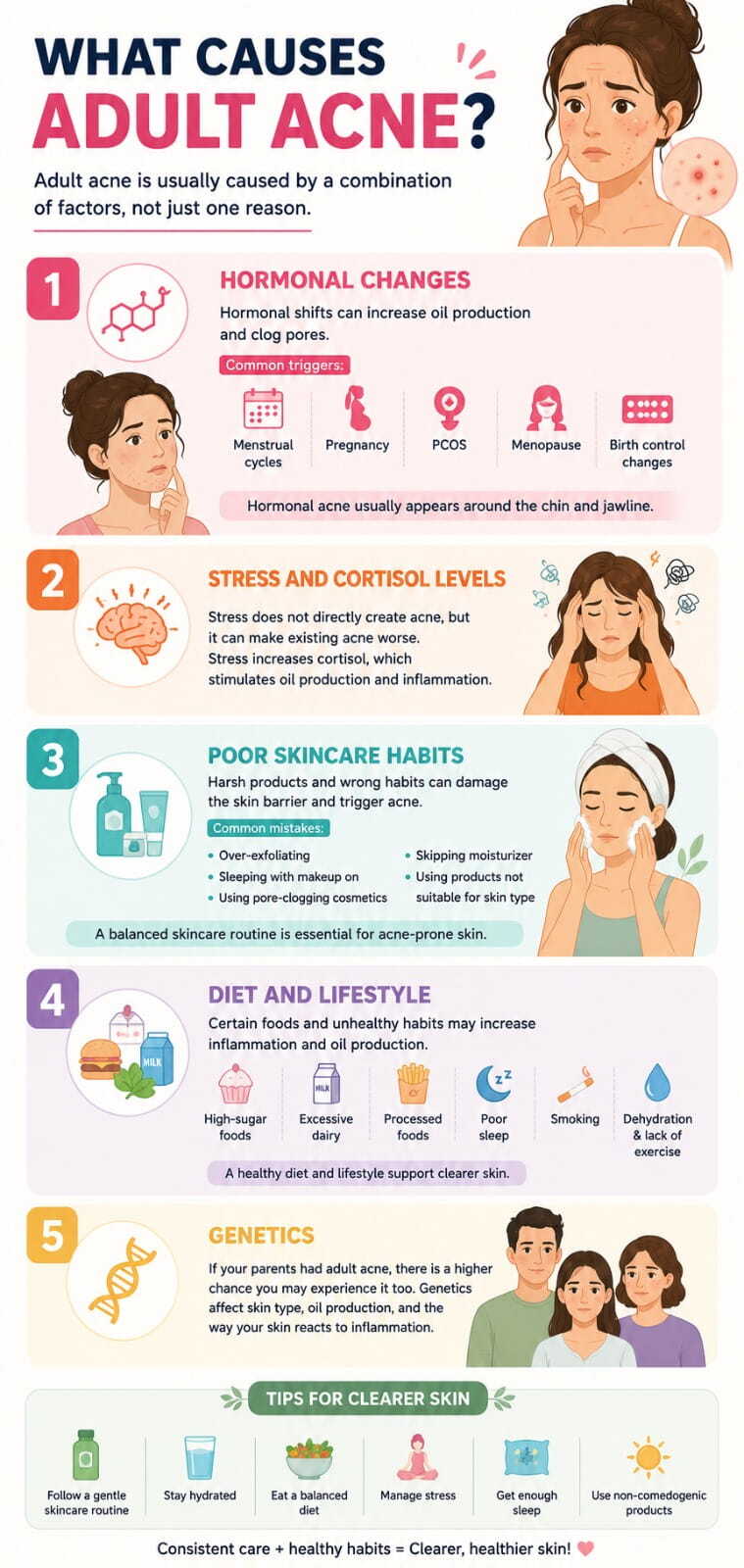
Understanding what may be contributing to your acne can help you build a more appropriate and sustainable approach to managing your skin.
Hormonal Changes
Hormonal fluctuations are one factor commonly associated with adult acne, particularly in women. Changes in hormone levels can influence sebum production and inflammation, potentially contributing to clogged pores and breakouts.
The menstrual cycle can be one potential trigger, with some people noticing that their acne becomes more noticeable at certain times of the month. Hormonal changes during pregnancy and menopause can also affect the skin, while conditions such as Polyendocrine Metabolic Ovarian Syndrome (PMOS) may be associated with persistent acne and increased androgen activity.
If you suspect that your breakouts may be hormone-related, treatment options can range from topical skincare ingredients to prescription treatments, depending on the type and severity of acne and its underlying cause. Our guide to hormonal acne vs fungal acne explores how these two types of breakouts can differ.
Hormonal influences can affect men as well. Androgens such as testosterone can stimulate the sebaceous glands to produce more sebum, which may contribute to clogged pores and acne. However, not all acne in men is hormone-related, as genetics, skincare, medications and other factors can also play a role.
Stress and Cortisol
Stress does not directly cause acne, but it can influence processes in the body that may make existing breakouts more difficult to manage. During periods of stress, the body releases hormones including cortisol, which can influence inflammation and sebum production and may contribute to more noticeable breakouts.
Stress can also affect your skin indirectly. You may sleep less, touch your face more often, or find it harder to maintain your usual skincare routine when you’re under pressure. Over time, these changes may contribute to persistent or more noticeable acne.
Managing stress is not always straightforward, but prioritising quality sleep, a consistent skincare routine, regular movement and time to unwind can all support your overall wellbeing and skin health.
Lifestyle Factors
Several lifestyle factors may influence acne, although their impact can vary from person to person. Smoking, poor sleep, and frequently picking or squeezing spots may increase inflammation or interfere with the skin’s natural recovery process, potentially making breakouts more difficult to manage.
Diet is another factor that has been studied in relation to acne, but the connection is not always straightforward. Research has found an association between acne and diets with a high glycaemic load, which can cause blood glucose levels to rise quickly. Some studies have also suggested a possible link between dairy consumption and acne, particularly certain types of milk. However, more research is needed to understand the relationship and why it may occur.
Rather than eliminating entire food groups, it can be more useful to notice whether particular foods consistently seem to coincide with your breakouts. Maintaining a balanced, varied diet that includes vegetables, fruit, wholegrains, lean sources of protein and healthy fats can support overall health and provide the nutrients your skin needs.
Simple daily habits can also make a difference when caring for acne-prone skin. Avoid picking or squeezing spots, cleanse gently, and choose non-comedogenic skincare and cosmetic products that are suitable for your skin type. Keeping your routine consistent can help support the skin barrier while you manage breakouts.
Why Your Skin Barrier Matters for Acne
Your skin barrier is the outermost layer of your skin and plays an important role in retaining moisture and protecting the skin from external irritants and environmental stressors. It is made up of skin cells, lipids and natural moisturising factors that work together to help maintain hydration and support the skin’s natural protective function.
When the skin barrier becomes impaired, it cannot retain moisture as effectively. This can increase transepidermal water loss (TEWL), meaning water escapes from the skin and evaporates from its surface. As a result, your skin may feel dry, tight, rough, flaky or more sensitive than usual. You may also notice increased redness or stinging when applying products that were previously comfortable.
An impaired skin barrier does not necessarily cause acne, but it can make acne-prone skin more difficult to manage. Dryness and sensitivity may make certain active ingredients harder to tolerate, while irritation and inflammation can make existing breakouts feel more uncomfortable.
This is why supporting your skin barrier is an important part of an acne-friendly skincare routine. Rather than focusing only on treating individual breakouts, a balanced routine should also help maintain hydration, minimise unnecessary irritation and keep the skin barrier supported.
Your skin barrier can become temporarily compromised for several reasons, including over-cleansing, excessive exfoliation, very hot water, cold or dry weather, and using active ingredients more frequently than your skin can comfortably tolerate. However, this does not mean that acne treatments are inherently damaging to the skin barrier. Ingredients such as salicylic acid, benzoyl peroxide and retinoids can play an important role in managing acne when introduced appropriately and used as directed.
The key is finding a balance between treating breakouts and supporting your skin barrier. Gentle cleansing, regular moisturising and barrier-supporting ingredients such as ceramides, niacinamide and hyaluronic acid can help maintain hydration and comfort while you use targeted acne treatments.
Rather than choosing between treating acne and caring for your skin barrier, a well-balanced skincare routine can support both. The goal is to manage congestion and inflammation while maintaining hydration and minimising unnecessary irritation.
For more advice on caring for a compromised skin barrier, explore our skin barrier repair collection.
How to Treat Adult Acne Without Damaging Your Skin Barrier
Treating adult acne does not mean you have to compromise your skin barrier. A well-balanced skincare routine can help manage breakouts while maintaining hydration, comfort and overall skin health.
Choose a Hydrating, Non-Comedogenic Moisturiser: Keeping acne-prone skin hydrated can help support the skin barrier, particularly when using active acne treatments. Look for non-comedogenic formulas containing ingredients such as ceramides, glycerine or hyaluronic acid. The best moisturiser will depend on your skin type and the other products in your routine.
Use a Gentle Cleanser: Cleansing helps remove excess oil, makeup, SPF and daily impurities, but your cleanser should not leave your skin feeling tight or stripped. If you are using a salicylic acid cleanser and notice dryness or irritation, consider alternating it with a gentler formula.
Include Barrier-Supporting Ingredients: Ingredients such as ceramides, cholesterol and fatty acids help support the skin’s natural lipid barrier. Instead of adding multiple individual products, consider choosing a well-formulated moisturiser that combines barrier-supporting ingredients with hydrating and soothing components.
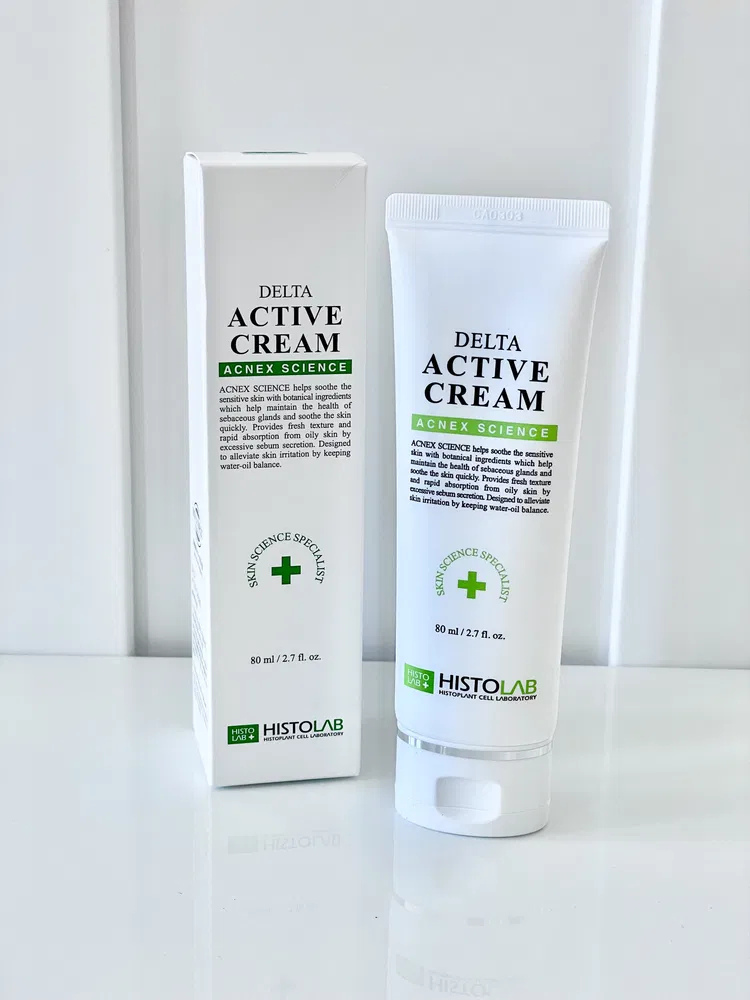
HISTOLAB Delta Active Cream can be incorporated into a targeted skincare routine. Its professional skincare formulation is designed to support skin comfort and help maintain a healthier-looking skin barrier, making it a suitable option when your skin needs both targeted care and hydration. Apply it as part of your moisturising step and adjust the frequency according to your skin’s needs.
The goal is not to avoid effective acne ingredients, but to use them thoughtfully alongside gentle cleansing, adequate moisturisation and daily sun protection. If your skin becomes persistently irritated, painful or excessively dry, consider reducing the frequency of active ingredients and speaking with a dermatologist or healthcare professional.
Final Thoughts
Managing adult acne is about finding the right balance between treating breakouts and supporting your skin barrier. A gentle, consistent routine with targeted actives and adequate hydration can help keep acne-prone skin healthy and comfortable.
For persistent or painful acne, speak with a dermatologist or healthcare professional for personalised advice.